


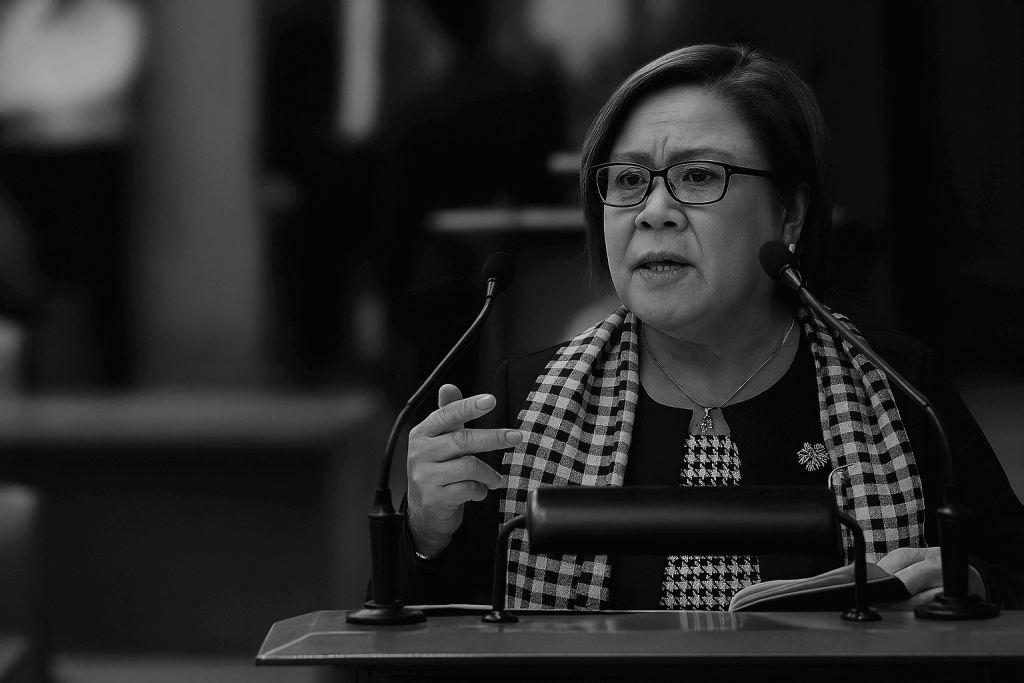
MANILA, Philippines — Lowering the age of criminal responsibility to 10 years old is an “abdication of justice,” not a solution, according to Mamamayang Liberal Partylist Rep. Leila de Lima.

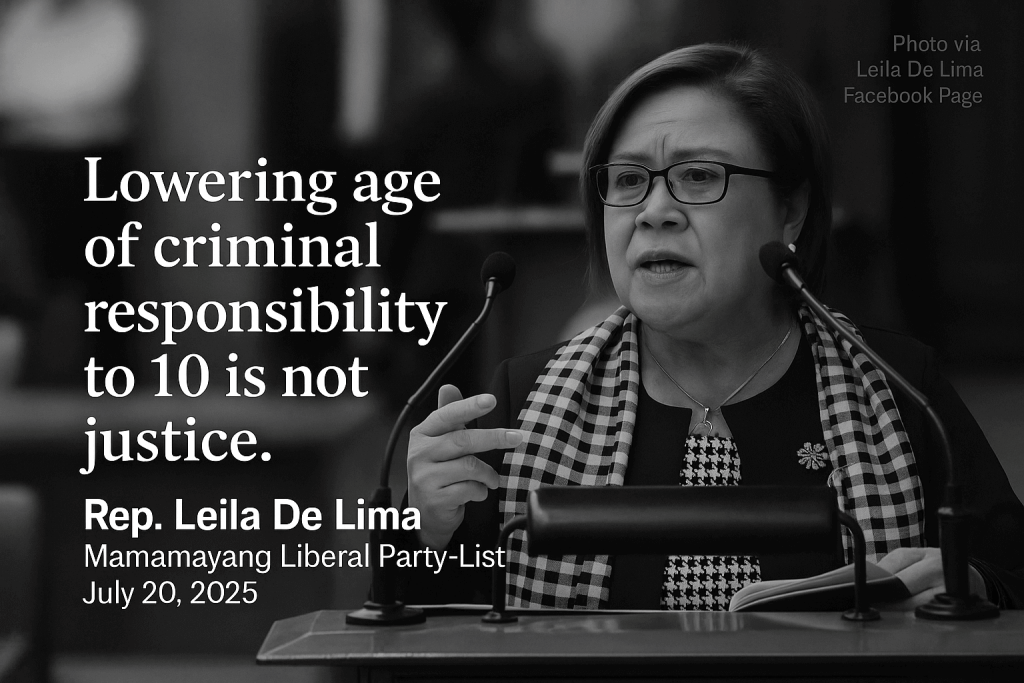
De Lima’s statement came after Senator Robinhood Padilla filed a bill seeking to amend Republic Act (RA) No. 9344, also known as the Juvenile Justice and Welfare Act of 2006.
“A child is not a criminal. A lost child should not be locked up but talked to, cared for, and given hope,” De Lima emphasized.
She argued that amending the law to prosecute children as young as 10 unfairly shifts the weight of a broken justice system onto the shoulders of society’s most vulnerable.
“We do not fix a broken justice system by putting its weight on the smallest, weakest shoulders. We fix it by asking hard questions: Why do some children get involved in crime? Who really benefits from these crimes? Where have we failed as a society?” she said.
A “Recycled Idea” That Punishes Trauma
The lawmaker criticized the proposal as a “recycled idea that refuses to die” despite consistent opposition from child rights and human rights advocates.
“This bill does not address crime. It punishes trauma. It does not protect society. It betrays children we have already failed,” she pointed out.
De Lima asserted that the Juvenile Justice and Welfare Act is already “clear and progressive” and called for better implementation instead of amendments.
“How many of our LGUs have proper Bahay Pag-asa? How many have enough social workers, psychologists, and trained personnel to offer real intervention and reintegration?” she asked.
Justice or Cruelty?
Appealing to her colleagues in Congress, De Lima questioned the morality of treating children as criminals.
“Are we the kind of nation that throws away a child before we even try to understand their pain?” she asked.
“To be truly just is to know the difference between punishment and cruelty. Exposure is not consent. Exposure is not maturity. Exposure is not accountability,” she added.
De Lima urged lawmakers to stop treating children as threats, calling them “mirrors of society”.
“If we don’t like what we see, it is not the mirror we must shatter. It is the reflection of our failures,” she concluded.